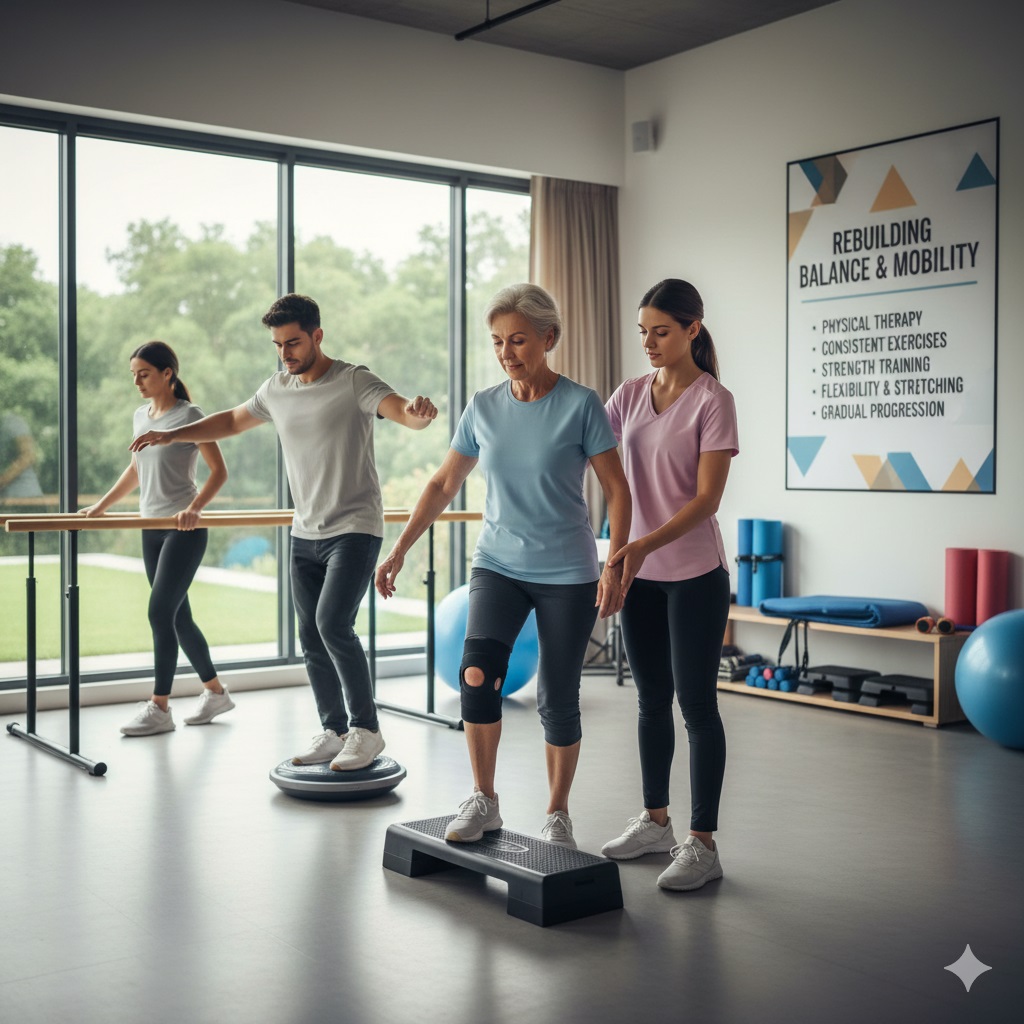
The recovery process with a leg injury entails a step-by-step approach to regaining balance and running through pain treatment measures involving rehabilitation, careful assessments, and data-driven treatment of the patient. The perspectives as elicited in the questions that follow are those that are of concern to persons when recovering.
Why Does Immobilization Affect Your Balance and Mobility?
The process of immobilization makes the muscles weak, decreases the range of motion of the joint, and interferes with neuromuscular coordination- or the neural system that helps your nervous system communicate well with your muscles. One can start by buying gym equipment and exercising with the help of a physiotherapist.
This causes stiffness, instability, and lack of confidence during weight bearing. This knowledge would assist you in taking rehabilitation step by step and in a safe manner.
When Should You Start Working on Balance and Mobility After a Leg Injury?
Mobility and balance exercises should only start after a healthcare professional or physiotherapist has given explicit consent to this. The initial movements usually begin with the tender pain-free activities like pumps of the ankles, assisted motion of the range, or light weight lifting. Early initiation predisposes to re-injury, whereas late initiation of rehabilitation can extend the period of stiffness and instability.
What Initial Mobility Exercises Can Help You Regain Movement Safely?
Mobility exercises at the early stage emphasise small and controlled movements which reintroduce the surrounding of the injured part without undue stress. They may involve any of the following: heel slides, ankle circles, knee extensions, and stretching forward with a therapist. These are easy exercises that assist in getting the blood flowing, assist in alleviating stiffness, as well as prepare the leg for higher levels of training.
How Can You Gradually Rebuild Muscle Strength After Immobilization?
The most common way of starting the strength rebuilding process involves first undergoing the isometric exercises, i.e., muscle training without movement, after which resistance-based exercises commence.
Some of them are quad sets, glute squeezes, hamstring press-downs, and assisted leg raises. With the progression of the healing process, you may add resistance bands, squats using your bodyweight, and step-ups. Stabilizing muscles should be strengthened to give long-term support to the joint.
Which Balance Exercises Are Most Effective During Rehabilitation?
Balance training typically begins with a simple weight shift by holding onto a support. When the normalcy levels off, you should then advance to standing on one leg, controlled step-overs, toe-to-heel walking, and walking on a balance board with supervision.
These activities recondition your proprioception, or the sense of position in your body, essential in preventing future falls or missteps. One can buy gym equipment for the right training, which will improve balance.
How Can You Improve Mobility Without Overloading the Injured Leg?
Activities such as swimming, water walking, station water cycling, and assisted treadmill walking are best. These exercises are beneficial in regaining the motion of the joints without putting any weight on the leg under recovery. Gradual progression is possible, which results in minimal strain when carried out in controlled environments like water or machines.
What Signs Suggest You’re Progressing Safely During Recovery?
Safe progression is characterized by a better range of motion, less stiffness, more stable weight-bearing, and the ability to have daily movement patterns without pain. The mild muscle pain does not indicate anything is wrong, but sharp pain, swelling, or instability are the signs that you need to slow down and seek the help of a specialist.

Having enriching experience in the world of digital marketing, I have created a niche for myself in the industry. The primary focus lies in writing, blogs, articles and different stuff that help businesses to fetch higher rankings on SERPs. Most of the projects I work on are web design and development-oriented and make sure the content fulfils the requirement of the businesses.