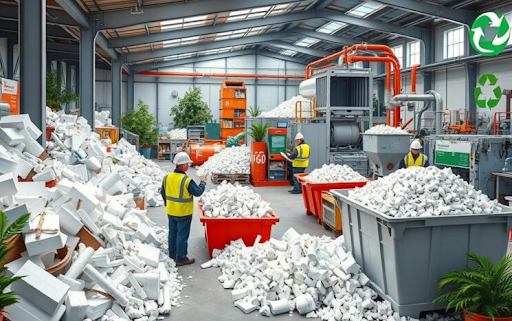
People usually chuck polystyrene foam in the bin without a second thought. It seems like another piece of rubbish heading straight to landfill. What most don’t realise is that recycling expanded polystyrene dramatically reduces its volume during processing. That bulky takeaway container compresses down to almost nothing. Manufacturers are actually buying this compressed material for purposes nobody would expect.
The Density Paradox
EPS foam is mostly air. Sounds pretty useless, right? Wait until you see what happens when it gets compacted. Specialist machines apply heat or mechanical pressure. The air gets forced out. What’s left behind is pure polystyrene denser than many hardwoods. This concentrated stuff becomes feedstock for products completely unrelated to packaging. Australian manufacturers mould it into outdoor furniture that outlasts treated pine.
Hidden Market Demand
Building companies want recycled foam badly. It beats fibreglass insulation when moisture becomes an issue. The construction industry figured out something clever. Shredded EPS mixed into concrete creates lightweight structural fill. It doesn’t compress under load either. Road engineers use it beneath highways to stop ground settling. Scandinavian countries have done this for years. Australia barely knows about it.
The Collection Gap
Australia produces massive amounts of foam waste. Most recycling depots won’t take it. They lack the densification equipment needed. The irony stings a bit. The material recycles perfectly well. The infrastructure just sits in industrial zones where regular people can’t access it. Some councils run drop-off programmes. They rarely advertise them beyond a website footnote.
What Happens After Collection
Recycling expanded polystyrene uses thermal compaction or mechanical densification. Thermal methods melt the foam into solid blocks. Mechanical crushing works without heat. Both approaches produce material that ships to reprocessing facilities. It gets blended with virgin polystyrene or goes into injection moulding. Here’s the interesting bit. Picture frames made from recycled foam resist impacts better than frames from new material.
Agricultural Applications
Farmers mix shredded EPS into soil for hydroponic growing. The foam doesn’t decompose or mess with pH levels. Particles improve drainage. They also retain moisture near plant roots. Certain crops actually prefer these conditions over traditional potting mixes. Commercial greenhouses are catching on to this method. It barely gets mentioned when people discuss recycling expanded polystyrene though.
The Contamination Problem
Food residue wrecks entire batches of foam. Takeaway containers cause headaches for this exact reason. Even minor grease contamination makes reprocessing impossible without extensive washing. Most facilities won’t bother with that. Clean packaging foam from electronics and appliances is different. Recyclers actively want this material. It arrives uncontaminated and in decent quantities.
Manufacturing Economics
Recycled polystyrene costs less than virgin material. Many manufacturers still choose new stock. Supply chains for recycled content are patchy and unreliable. Companies that commit to recycled foam struggle with consistent volumes. Demand exists but collection infrastructure can’t keep up. This frustrating cycle keeps usable material in landfills. Meanwhile, factories import virgin polystyrene from overseas.
Transport Challenges
Moving bulky foam around creates logistical nightmares for recyclers. A truck filled with uncompressed polystyrene carries mostly air. It’s economically absurd. This explains why so many collection programmes fail before they start. The maths just doesn’t work out for transport companies. Densification needs to happen close to collection points. Otherwise the entire operation loses money before material even reaches a processing facility. Some regions solve this by placing mobile compactors at transfer stations. Others simply give up on collection altogether.
Consumer Awareness
Most Australians have no idea where to take their foam waste. Council websites bury recycling information under layers of menus. People want to do the right thing but the system makes it unnecessarily difficult. Supermarkets accept soft plastics yet foam gets excluded from these programmes. The messaging is confusing and inconsistent across different councils. Some areas treat polystyrene as contamination in regular recycling bins. Others run special collection days that hardly anyone knows about. Better signage and clearer communication would dramatically increase participation rates.
Conclusion
There’s a massive gap between what’s possible with recycling expanded polystyrene and what actually happens. This reveals a system problem, not a material problem. Foam could become building insulation or agricultural medium or structural fill. Instead it sits in landfill. Collection networks haven’t caught up with processing capabilities. Australians create the waste and manufacturers want the recycled material. The middle infrastructure remains frustratingly incomplete. Councils need to invest in densification equipment and businesses need to commit despite inconsistent supply.

George is the voice behind Wisdomised, a news blog dedicated to delivering fresh, engaging stories that keep readers both informed and entertained. With a sharp eye for current events and trending topics, George crafts posts that make complex news accessible and enjoyable. His unique perspective and storytelling skills bring a refreshing twist to every update, inviting readers to explore the world through Wisdomised.