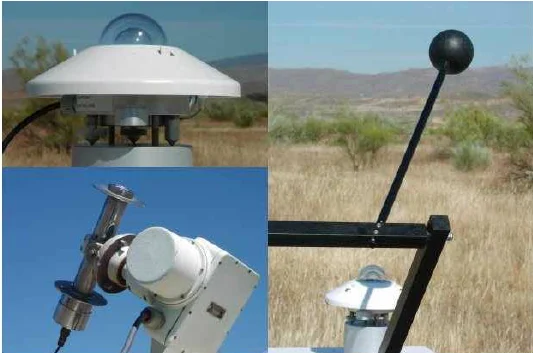
An Irradiance Sensor is an essential instrument used to measure the intensity of solar radiation striking a surface. These measurements, expressed in watts per square meter (W/m²), are vital for applications in solar energy, environmental monitoring, agriculture, and climate research. By providing accurate data on solar power, irradiance sensors enable engineers, scientists, and farmers to make informed decisions about energy production, crop growth, and environmental assessment. Understanding the types of irradiance sensors and their working principles is key to selecting the right device for specific applications.
Irradiance sensors are designed to capture solar radiation using different technologies. The most common types include photovoltaic sensors, thermopile sensors, and photodiode-based sensors. Photovoltaic sensors operate by converting light directly into an electrical voltage, making them simple, compact, and effective for most solar energy applications. Thermopile sensors, on the other hand, measure the heat generated by absorbed radiation and convert it into an electrical signal, providing accurate readings over a broader spectrum of sunlight. For high-performance and specialized applications, devices like the Irradiance Sensor from Rika Sensor deliver reliable and precise measurements, suitable for long-term solar monitoring and research.
Types of Irradiance Sensors
Photovoltaic-Based Sensors
Photovoltaic-based irradiance sensors use small solar cells to generate voltage proportional to the light intensity. These sensors are popular for their simplicity, low cost, and ease of integration into solar panel monitoring systems. They respond quickly to changes in light intensity, making them ideal for dynamic conditions where sunlight fluctuates frequently. However, their spectral response can be limited, and they may require calibration to match the solar spectrum accurately.
Thermopile Sensors
Thermopile sensors consist of a series of thermocouples connected in series or parallel. They measure the thermal energy produced when sunlight is absorbed and convert it into an electrical voltage. Thermopile sensors provide high accuracy and can measure the full solar spectrum, including both visible and infrared light. They are particularly suitable for scientific research, climate studies, and solar energy assessments where precise and stable measurements are critical.
Photodiode Sensors
Photodiode-based irradiance sensors are known for their fast response time and compact design. These sensors convert light into current using a semiconductor junction and are often used in applications where monitoring rapid changes in irradiance is necessary. While photodiodes are less sensitive to temperature variations than thermopiles, they may require additional calibration to maintain accuracy across different environmental conditions.
Working Principles of Irradiance Sensors
The core principle of an irradiance sensor involves converting incoming solar radiation into an electrical signal that can be quantified and analyzed. In photovoltaic sensors, photons striking the solar cell release electrons, generating a voltage proportional to the light intensity. Thermopile sensors operate on the Seebeck effect, where heat absorbed by a series of thermocouples produces a voltage proportional to the thermal energy. Photodiode sensors generate a current when photons hit the semiconductor material, and this current is proportional to the irradiance level.
Cosine Correction and Spectral Response
To ensure accurate readings, many irradiance sensors incorporate cosine correction. This feature adjusts measurements based on the angle at which sunlight strikes the sensor surface, accounting for variations in sun position throughout the day. Spectral response is another critical consideration; sensors should closely match the solar spectrum to avoid underestimating or overestimating irradiance. High-quality sensors achieve a broad and uniform spectral response, allowing precise measurement under different lighting conditions.
Applications of Irradiance Sensors
Irradiance sensors are used extensively across multiple fields. In solar energy, they help optimize panel orientation, track performance, and forecast energy generation. In agriculture, they monitor sunlight exposure for crops, aiding in greenhouse management and crop yield optimization. Environmental scientists use irradiance sensors to study solar radiation patterns, assess climate change impacts, and model energy balances. The versatility of these sensors makes them indispensable for both research and practical applications.
Calibration and Maintenance
Regular calibration and maintenance are essential for long-term accuracy. Sensors can accumulate dust, dirt, or environmental residues that affect performance. Periodic cleaning and recalibration against reference standards ensure reliable measurements over time. Many modern sensors are designed for low-maintenance operation, with durable housings and protective coatings to withstand outdoor conditions. Proper upkeep guarantees consistent and precise solar irradiance data.
Conclusion
Understanding the types and working principles of irradiance sensors is fundamental for anyone involved in solar energy, environmental research, or agricultural monitoring. Photovoltaic, thermopile, and photodiode sensors each offer distinct advantages depending on the application, while features like cosine correction and spectral response improve measurement accuracy. By choosing the appropriate sensor and maintaining it properly, users can ensure reliable solar irradiance data, optimize system performance, and support scientific research with precise environmental measurements.

George is the voice behind Wisdomised, a news blog dedicated to delivering fresh, engaging stories that keep readers both informed and entertained. With a sharp eye for current events and trending topics, George crafts posts that make complex news accessible and enjoyable. His unique perspective and storytelling skills bring a refreshing twist to every update, inviting readers to explore the world through Wisdomised.