Ductwork is an essential component of HVAC systems, responsible for efficiently distributing air throughout residential, commercial, and industrial buildings. The fabrication of ducts requires precision, accuracy, and efficiency to ensure optimal airflow and system performance. Achieving these goals relies heavily on the tools and equipment used during the manufacturing process. A combination of manual, semi-automatic, and fully automated machinery allows duct fabricators to produce high-quality duct components efficiently and consistently.
Modern ductwork fabrication integrates advanced machinery with skilled labor to streamline production, reduce material waste, and maintain strict tolerances. Understanding the different tools and equipment used in ductwork fabrication helps manufacturers optimize their processes, improve productivity, and ensure that ducts meet design specifications.
Cutting Equipment
Cutting is one of the first steps in duct fabrication, as raw materials must be sized accurately before bending, shaping, or joining. There are several types of cutting equipment used in ductwork fabrication:
- Manual Shears: Ideal for small-scale operations, manual shears allow operators to cut duct panels or sheets to size with relative ease. These tools are simple to use but require physical effort and are less efficient for large-scale production.
- Hydraulic Shears: These shears offer more power and precision than manual versions, making them suitable for thicker metal sheets and larger duct sections. They reduce operator fatigue while providing consistent cuts.
- CNC Laser and Plasma Cutters: For high-volume or complex projects, CNC cutting machines provide precision and speed. These machines can cut intricate shapes, patterns, and openings with minimal material waste. Laser and plasma cutters are particularly valuable for producing custom duct components and ensuring repeatable accuracy across large production runs.
Bending and Rolling Machines
After cutting, duct panels are often shaped into desired forms such as rectangular or round ducts. Bending and rolling machines are critical for achieving accurate angles and curves:
- Press Brakes: Press brakes are used to bend metal sheets into precise angles. Operators can adjust the bending angle based on duct design, ensuring uniformity across all sections.
- Plate Rollers: Plate rollers form cylindrical or spiral ducts by rolling flat metal sheets into a round shape. These machines allow for consistent curvature and are essential for producing round or oval ductwork.
- Corner Notchers and Brake Presses: Specialized machines create notches and folds required for corner joints in rectangular ducts, enabling easy assembly while maintaining structural integrity.
Seaming and Joining Tools
Proper seaming and joining are vital for airtight ductwork, reducing leakage and improving system efficiency. The tools and equipment used include:
- Flanging Machines: Flanging machines create uniform edges on duct panels, allowing sections to connect securely. Automated flanging machines improve production speed while maintaining consistent quality.
- Seaming Machines: These machines produce airtight seams by folding and locking duct edges. Seam integrity is critical for energy efficiency and system performance, making automated or semi-automated seaming machines highly valuable.
- Hand Tools: In addition to machines, hand tools like hammers, mallets, and clamps are often used to assemble, adjust, or reinforce seams manually.
Punching and Notching Equipment
Punching and notching machines create openings, perforations, or access panels in ductwork. These operations are necessary for integrating dampers, inspection doors, or other HVAC components:
- Hydraulic Punches: Hydraulic punch machines can create precise holes or slots in duct panels quickly and efficiently.
- Notching Machines: Notchers remove material to form angles or tabs required for assembly. These machines improve accuracy and reduce the need for manual labor, particularly in high-volume production.
Spiral Duct Machines
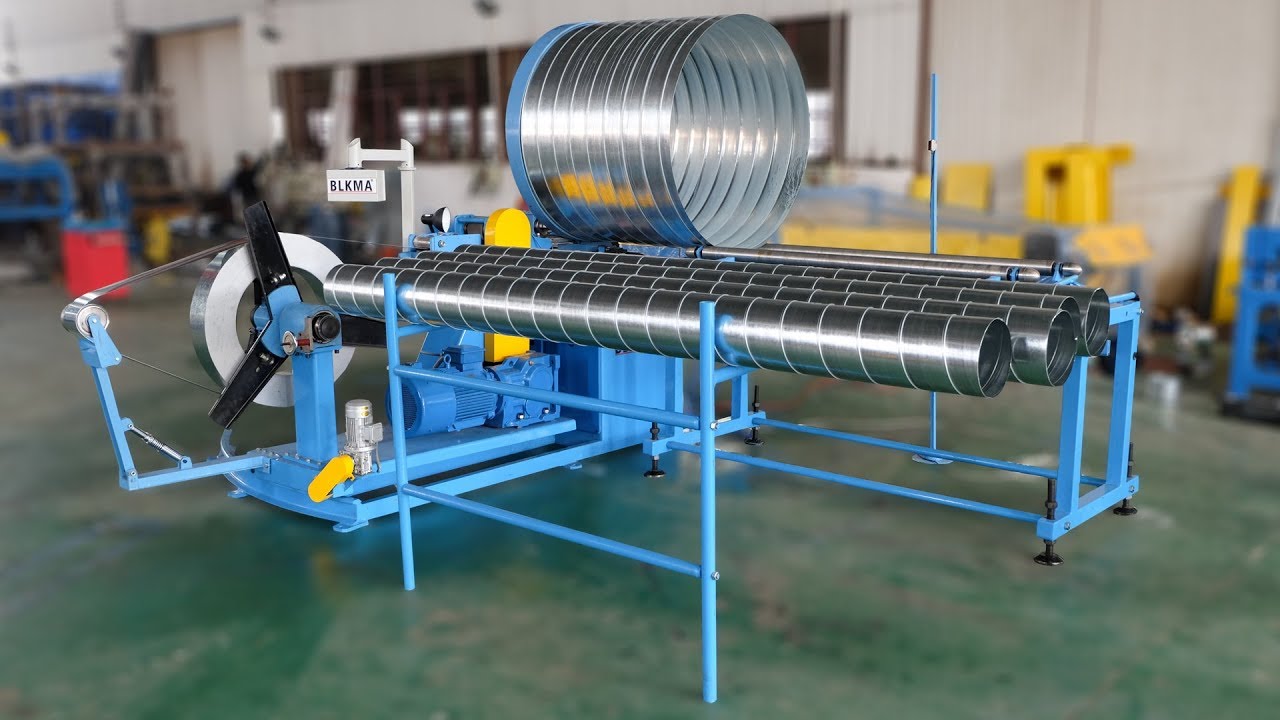
Spiral duct machines are specialized equipment designed to produce round or spiral duct sections. They roll and seam flat metal sheets into cylindrical ducts with uniform dimensions. Spiral ducts are favored in HVAC systems for their structural strength, airflow efficiency, and ease of installation. Automatic spiral duct machines are capable of high-volume production while maintaining precision and repeatability.
Hand Tools and Accessories
Despite the prevalence of automated machinery, manual tools remain important in ductwork fabrication. Common hand tools include:
- Tape measures and squares for accurate measurements
- Snips and aviation shears for minor adjustments
- Drill drivers and rivet guns for fastening
- Hammers and mallets for alignment and shaping
Hand tools complement machines by allowing operators to fine-tune, adjust, and assemble ductwork components with precision.
Safety Equipment
Safety is a critical consideration in duct fabrication due to sharp metal edges, heavy sheets, and machinery operation. Essential safety equipment includes:
- Gloves, safety goggles, and protective clothing
- Ear protection in high-noise environments
- Safety guards and emergency stop mechanisms on machinery
Ensuring proper safety protocols protects workers and maintains a productive manufacturing environment.
Conclusion
The fabrication of high-quality HVAC ductwork relies on a combination of specialized tools and equipment. Cutting, bending, rolling, punching, and seaming machines provide precision, efficiency, and repeatability, while hand tools complement automated processes for fine adjustments and assembly. Spiral duct machines and CNC systems enable manufacturers to meet complex designs and high-volume demands.
By using the appropriate tools and equipment, ductwork fabrication becomes more efficient, accurate, and safe, ensuring the production of durable, energy-efficient, and reliable HVAC duct systems.

George is the voice behind Wisdomised, a news blog dedicated to delivering fresh, engaging stories that keep readers both informed and entertained. With a sharp eye for current events and trending topics, George crafts posts that make complex news accessible and enjoyable. His unique perspective and storytelling skills bring a refreshing twist to every update, inviting readers to explore the world through Wisdomised.