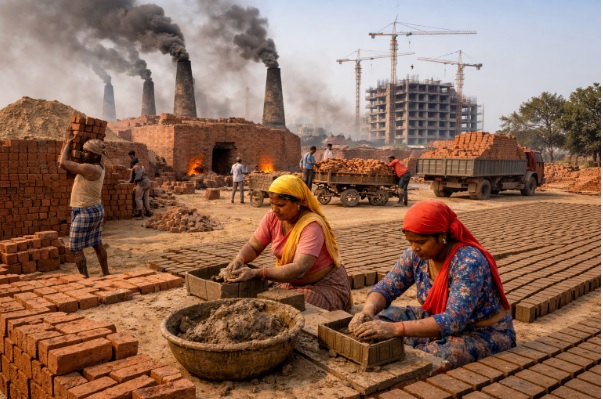
Construction activities within the various cities and towns are taking place at a quicker rate than before. Homes, roads, and projects all demand a constant supply of materials without any delays. In this regard, brick manufacturers in India are adapting different approaches to ensure a timely supply with constant quality. This is, therefore, influencing the timely completion of projects with the pressure of rising demand.
- Scaling Production Without Compromise: In order to match higher orders, many plants are improving daily output with better plans. The time of the shifts, loading of the kilns, and curing schedules are re-examined to eliminate idle time. Instead of running to complete orders sooner, there is more interest in achieving balance in bricks so that they are still consistent in quality.
- Improving Raw Material Control: As a result of demand pressure, more control is felt at the level of soil selection and mixing. Sources are verified regularly, and moisture levels are also closely monitored daily. This ensures that any slight changes in the quality of the raw input do not affect the quality of the firing, as more checks are in place at this stage. Hence, faster production does not affect quality.
- Modern Kilns and Energy Use: Many facilities also refine the design of the kiln to help speed up the cycles. This is achieved more precisely with regard to heat flow. This helps avoid uneven burning. Additionally, there is a more efficient use of fuel, which minimizes waste for large batches.
- Workforce Skills and Process Discipline: Increasing demand has prompted greater attention to be paid to training and instructing employees, as well as defining steps for molding, drying, and stacking. Seasoned personnel assist in training younger members, which helps keep things moving on the floor. Good process discipline enables production levels to be increased without any confusion.
- Logistics and Local Supply Networks: Meeting the needs is not only about bricklaying; it is also about moving bricks effectively. The decrease in journey distance and the location of bricks near building sites reduce waiting time. Better coordination between transport teams reduces breakage and loss. Smooth brick transport ensures the timely receipt of bricks.
- Data Tracking on Output: Daily records inform decisions about the timing of fires and batch sizes. Basic records monitor breakage, moisture, and fuel consumption. The patterns emerge rapidly as demand changes. By examining these records every day, teams address problems before accidents happen and prevent heavy losses during critical supply periods. In this regard, there is clarity in planning under pressure without any signs of panic or rush.
- Quality Checks at Scale: High volume means even a few defects matter; the checks are carried out throughout the day. tests like size, color, and sound are repeated for each batch. Defects are sorted ahead of time before sending out the products. This repeated checking helps in maintaining high levels of trust irrespective of high demand pressures. It avoids consumer complaints and hence maintains a high level of goodwill with builders with whom long-term relations have been built.
ConclusionThe increasing construction needs have fueled the steady pace of change within production, people, and product flow. The response, however, indicates a sense of control as opposed to cutting corners. This steady approach reflects how the brick manufacturing industry in India is adapting to meet demand without losing reliability. With keen planning and simple advancements, growth is met without losing reliability.
